
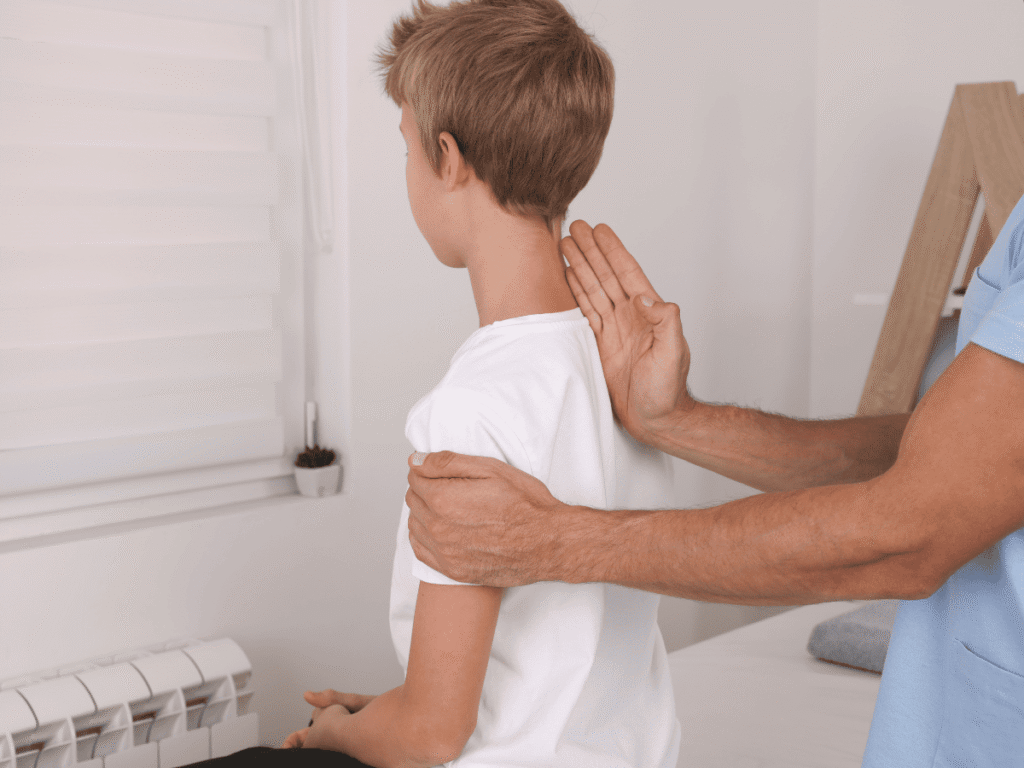
Spotting scoliosis signs in children early can make a huge difference in how effectively it’s managed and treated. From uneven shoulders to subtle waist asymmetry, understanding what to look for gives parents confidence and peace of mind. At POBAR, our compassionate pediatric team supports families through early detection, personalized care, and advanced scoliosis treatments designed for growing bodies. If you have concerns about your child’s posture or spinal development, don’t hesitate to seek evaluation and support.
From a parent’s perspective, noticing “just posture” concerns can feel confusing—especially during the rapid growth of childhood. But understanding scoliosis signs in children helps you distinguish normal variation from something that needs medical attention.
Scoliosis, a side‑to‑side curvature of the spine, often begins subtly and without pain, so knowing what to look for is important for early detection and care. Families who learn the early indicators can seek help sooner, and that can broaden treatment options and lead to better outcomes.
Why Early Awareness Matters
Scoliosis sometimes starts so quietly that even attentive parents can miss the first changes. Most childhood scoliosis cases occur during growth spurts in the pre‑teen and early teen years, when the spine can curve more rapidly. Recognizing early signs empowers you to pursue evaluation before a curve progresses, which can mean less invasive treatment and improved long‑term health.
Our specialists emphasize comprehensive assessments to catch changes early and support your child’s spinal development with care and precision.
Common Signs of Scoliosis in Children
Children with scoliosis signs in children may not complain of pain at first, which is why visual clues are vital. Many of the earliest indicators are physical and can be noticed during everyday activities or simply when your child is standing or bending over.
Visible Clues to Watch For
When observing your child’s posture and symmetry, keep an eye out for:
- Uneven shoulders or shoulder blades: One shoulder may appear higher or more prominent than the other, especially when standing straight or bending forward.
- Asymmetrical waist or hips: A waistline that looks uneven or hips that appear tilted can signal a spinal curve.
- Rib prominence: When your child bends forward with arms down, one side of the rib cage may stick out more than the other due to the twist in the spine.
- Clothes not hanging evenly: Shirts or pants that seem lopsided can mirror underlying asymmetry.
Subtle signs may also include leaning to one side without any underlying injury and adjustments in how your child walks or stands to feel more balanced. Each of these signs on its own doesn’t prove scoliosis, but when you see more than one—especially consistently—it’s worth further evaluation.
How Parents Can Observe Scoliosis at Home
While a formal diagnosis always requires a clinical exam and imaging, parents can begin with simple observations:
- Use the forward bend test: Have your child stand with feet together and bend forward at the waist, palms together. Any asymmetry in the ribs, shoulders, or back shape may be more noticeable in this position.
- Take casual photos over time: Looking at your child’s back in photos from different months can help spot gradual changes you might miss in day‑to‑day life.
- Check during routine dressing: Pay attention when your child dresses. If clothing frequently seems uneven, it could be a clue to deeper alignment issues.
These home observations aren’t a substitute for professional screening, but they can help you feel confident about when to reach out to a pediatric orthopedic specialist for further evaluation.
What Happens During a Professional Evaluation
If you notice potential scoliosis signs, a specialist such as those at POBAR will perform a compassionate, child‑friendly examination tailored to your child’s comfort. Typical steps include:
- Detailed physical exam: The clinician will look at shoulder height, hip symmetry, and spinal alignment, often using the forward bend test.
- Imaging studies: If signs suggest scoliosis, an X‑ray captures the spine’s shape from multiple angles to measure the curve’s degree precisely.
- Discussion of symptoms: Even though many children don’t report pain, clinicians ask gentle questions about any discomfort, fatigue, or changes in posture over time.
Early evaluation sets the stage for thoughtful planning with your child’s growth and well‑being in mind.
Treatment Options and What They Mean
Once scoliosis is diagnosed, the care path depends on the degree of curvature and how much growth your child has left. We tailor plans with warmth and evidence‑based care.
- Observation: For mild curves that aren’t progressing quickly, regular check‑ups help track any changes over time.
- Bracing: When a curve is moderate and the child is still growing, a custom brace can help slow or prevent progression.
- Surgical consultation: In rare cases of severe curvature, surgical options may be recommended, and we provide thoughtful referral support for surgical planning.
Families often wonder what treatment will “look like” day‑to‑day. Bracing, for example, becomes part of the child’s routine, and specialists help with fitting and adjustment so your child can stay as active and comfortable as possible.
Supporting Your Child Through Care and Growth
Addressing scoliosis goes beyond bones and curves; it touches confidence, activity, and emotional well‑being. Our approach reflects this understanding, combining clinical expertise with empathy and reassurance. Children do best when they feel understood, encouraged, and engaged in their care, and that’s a central part of our philosophy.
Your Child’s Well‑Being Matters at POBAR
If you’ve noticed potential scoliosis signs in your child and want support you can trust, the caring team at POBAR is here to help. We understand the questions and worries that come with noticing posture changes, and our specialists provide thorough evaluations, individualized care plans, and family‑centered guidance. Reach out to learn more about how we can help your child grow strong and confident with personalized scoliosis care.
Frequently Asked Questions
How soon should I be concerned about my child’s posture?
Posture differences can be normal, especially during growth, but if you consistently notice uneven shoulders, hips, or waist asymmetry, it’s worth discussing with a pediatric specialist. Early evaluation helps determine whether scoliosis or another issue might be present.
Can scoliosis signs be mistaken for poor posture?
Yes, minor posture irregularities can resemble early scoliosis signs, but true scoliosis involves structural curvature of the spine that doesn’t correct simply by standing up straight. A professional assessment clarifies the difference.
Is pain common with scoliosis in children?
Many children with mild scoliosis don’t experience pain, which is why signs like body asymmetry or clothing not hanging evenly are key clues. Pain may occur in more severe cases or with significant curvature.
At what age does scoliosis usually show up?
Scoliosis most often becomes noticeable during growth spurts in pre‑teens and early teens, but it can appear at any age during childhood. Regular wellness check‑ups help catch changes over time.
Will my child outgrow scoliosis?
Scoliosis itself doesn’t simply go away with growth, and curves can progress, especially during rapid skeletal growth. However, early detection and appropriate management significantly increase the chances of keeping the curve mild and manageable.
