
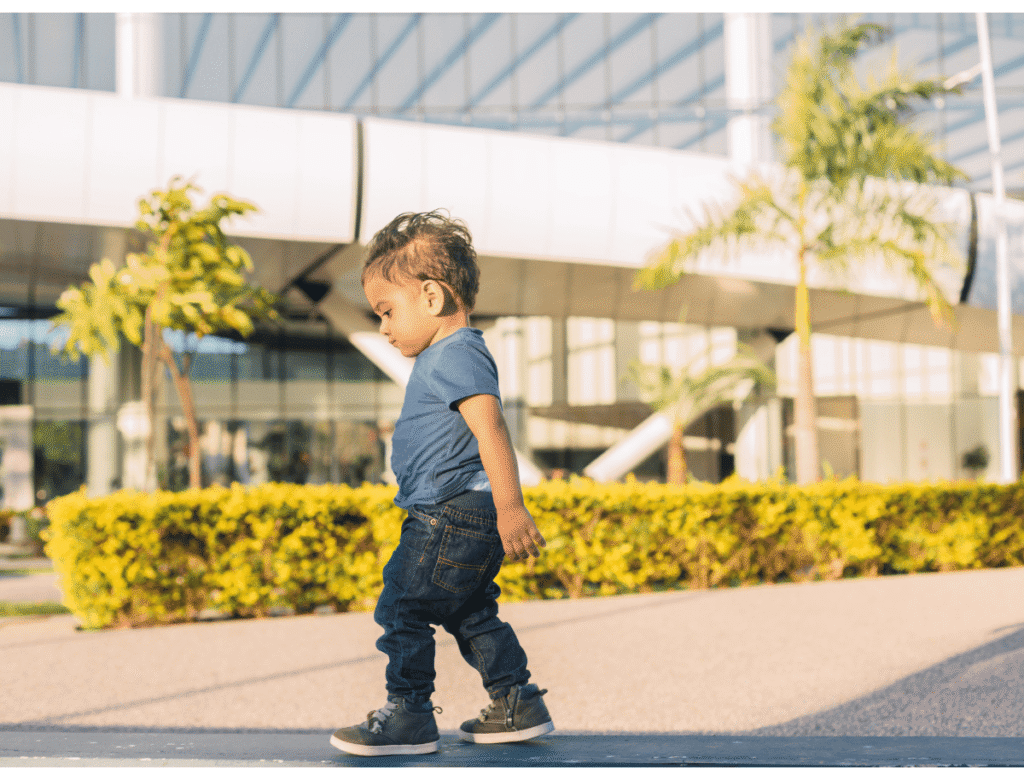
In-toeing in children can be caused by increased femoral anteversion, a common developmental condition affecting the thigh bone. At POBAR, our pediatric orthopedic specialists guide families through understanding the condition, its natural progression, and treatment options when necessary. This article explains how increased femoral anteversion affects gait, what to expect as children grow, and strategies for management. Parents can gain clarity on monitoring their child’s development, safe activities to encourage, and scheduling a consultation for personalized guidance.
Many children are born with variations in how their legs and hips align. One common pattern is in-toeing, where the feet point inward while walking. Increased femoral anteversion is a frequent cause of in-toeing, especially in toddlers and preschoolers. This condition occurs when the femur (thigh bone) rotates more inwardly than usual. While it can look dramatic, it is often harmless and improves with age. Understanding the mechanics, risk factors, and developmental timeline of increased femoral anteversion can reassure parents and guide appropriate care, ensuring children maintain healthy mobility.
What is Increased Femoral Anteversion?
Increased femoral anteversion refers to an inward twist of the thigh bone relative to the hip. This rotation causes the knees and feet to turn inward, producing the classic “pigeon-toed” gait.
- It is more noticeable when children start walking independently.
- Girls are slightly more likely to show inward rotation than boys.
- Many children with this condition have no pain or functional limitations.
- Severity can vary from mild inward rotation to a more pronounced angle, but most cases improve without intervention.
The condition usually peaks between ages 3 and 5 and often improves naturally as the child grows. By the time children reach adolescence, most demonstrate near-normal leg alignment without intervention, which makes early reassurance essential.
Signs and Symptoms of In-Toeing
Parents may notice several indicators of increased femoral anteversion:
- Feet pointing inward while walking or running
- Knees that seem to angle toward each other
- Difficulty running in a straight line or frequent tripping
- Unusual sitting positions, such as “W-sitting,” which can temporarily accentuate inward rotation
- Clumsiness or awkward gait patterns that may be noticeable during sports or playground activity
It’s important to differentiate increased femoral anteversion from other causes of in-toeing, such as tibial torsion or hip dysplasia, both of which may require different evaluation and management. Proper assessment ensures the child receives accurate guidance.
Causes and Developmental Factors
The exact cause of increased femoral anteversion is not fully understood, but it is considered a normal variation in bone development.
- Genetic factors may play a role, as the condition sometimes runs in families.
- Muscular development and flexibility of the hip capsule contribute to how the femur rotates during growth.
- Rapid growth phases can temporarily accentuate in-toeing, even in otherwise healthy children.
- Environmental factors, such as habitual sitting positions, may influence the degree of inward rotation.
In most cases, the condition is self-limiting and improves as bones remodel and muscles strengthen during childhood. Awareness of these factors helps parents make informed choices about activity and monitoring.
How Pediatric Orthopedists Evaluate In-Toeing
When parents notice in-toeing, a pediatric orthopedic evaluation ensures proper diagnosis. Our specialists consider several factors:
- Comprehensive medical and family history to identify patterns or hereditary links
- Observation of gait patterns while walking, running, and during play
- Assessment of hip and knee rotation ranges to determine severity
- Identification of any underlying conditions that might require treatment, such as hip dysplasia or neuromuscular disorders
In some instances, X-rays or other imaging may be used to rule out structural abnormalities. Early evaluation provides reassurance to families and prevents unnecessary interventions, giving children freedom to move safely.
Treatment Options and Management
Most children with increased femoral anteversion do not require medical intervention. Treatment focuses on observation, education, and guidance for safe activity.
- Encouraging active play and normal walking patterns
- Avoiding special shoes or braces unless specifically recommended
- Physical therapy in rare cases where muscle weakness or imbalance affects function
- Guidance on sitting and recreational activities to minimize temporary worsening of in-toeing
Surgery is almost never required unless the condition causes significant functional limitations or pain in older children. We emphasize non-invasive management, ensuring children can remain active while their alignment naturally improves.
When to Seek Medical Attention
Although increased femoral anteversion is usually harmless, certain signs should prompt evaluation:
- Persistent tripping or difficulty walking
- Pain in the hips, knees, or ankles
- Sudden worsening of gait patterns
- Concerns about asymmetry between legs or delayed improvement
Prompt consultation with our pediatric orthopedic specialists can provide clarity, reassurance, and guidance on next steps. Early assessment ensures children stay active without unnecessary restrictions while monitoring normal development.
Supporting Your Child at Home
Parents can support their child’s development without specialized equipment:
- Encourage activities that promote balance, coordination, and lower body strength, like climbing, running, and swimming
- Avoid prolonged W-sitting positions, which may increase inward rotation temporarily
- Maintain regular pediatric check-ups to monitor leg alignment and overall growth
- Focus on positive reinforcement rather than corrective measures, which helps build confidence in movement
Creating a supportive, active environment helps children naturally improve gait while maintaining confidence in their mobility and overall well-being.
Long-Term Outlook for Children with Increased Femoral Anteversion
Most children with this condition experience full improvement by late childhood or early adolescence. Long-term studies show:
- Few lasting functional limitations
- No significant impact on athletic performance or daily activities
- Occasional mild inward gait that is typically cosmetic rather than medical
Understanding the typical developmental trajectory allows families to monitor progress and reduce unnecessary worry, knowing that intervention is rarely needed.
POBAR Pediatric Orthopedics: Expert Guidance for In-Toeing
At POBAR, our experienced pediatric orthopedic team specializes in understanding and managing conditions like increased femoral anteversion. We provide compassionate, child-centered care, helping families understand when observation is appropriate and when intervention may be needed. Parents can feel confident knowing their child’s gait is carefully monitored, and any necessary care is tailored to their specific developmental stage. Book a consultation today to discuss your child’s in-toeing, review activity recommendations, and ensure the healthiest growth and mobility possible.
FAQ
- Will my child outgrow in-toeing caused by increased femoral anteversion?
Yes, most children naturally outgrow in-toeing as their bones and muscles develop, typically by age 10 to 12. Regular monitoring ensures normal progress. - Are braces or special shoes necessary for treatment?
No, in most cases, braces or special shoes are not recommended. Normal activity and active play are sufficient for improvement. - Can increased femoral anteversion cause pain?
Usually, this condition is painless. If pain develops, it may indicate another underlying issue, and a pediatric orthopedic evaluation is advised. - How is increased femoral anteversion different from tibial torsion?
Increased femoral anteversion affects the thigh bone and hip rotation, while tibial torsion involves twisting of the shin bone. Correct diagnosis is important for proper guidance. - When should I schedule a consultation?
If your child has noticeable in-toeing, frequent tripping, or pain, scheduling a consultation is recommended. Early assessment provides reassurance and guidance on management.
