
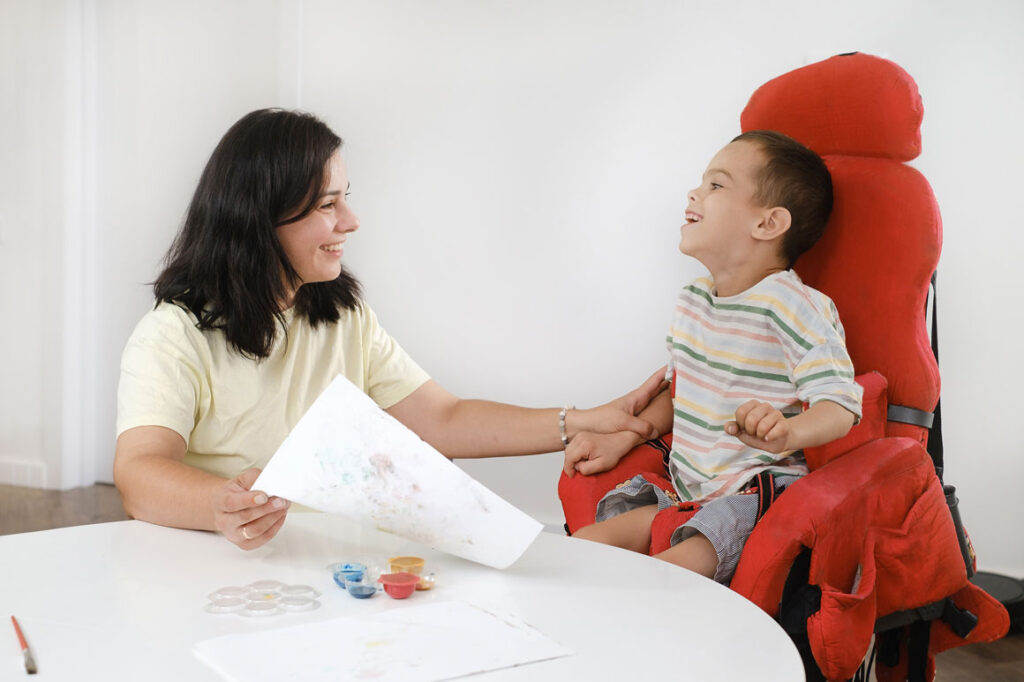
A cerebral palsy diagnosis brings a lot for a family to process, and the orthopedic piece is often just one part of a much bigger picture your family is already navigating. Cerebral palsy itself does not get worse over time, but the way it affects muscles and joints can change as your child grows, which is exactly where our team’s role fits in. At POBAR, we focus specifically on the bones, joints, and muscles, working alongside your child’s broader care team rather than replacing any part of it. Understanding what this piece of care actually involves can make one part of a complex picture feel a little more manageable.
Cerebral palsy affects muscle tone and control, and that muscle imbalance is what can gradually affect the hips, spine, and legs over time. Watching for these changes early is what allows us to help before they become harder to manage.
Why Muscle Tone Affects Bones and Joints Over Time
Cerebral palsy involves increased muscle tone, or spasticity, in certain muscle groups, and when some muscles pull more strongly than others around a joint, that imbalance can gradually shift how the joint sits. This is different from how typical growth and development work, which is why children with cerebral palsy are monitored on a different schedule than children without it. The goal of that monitoring is not to find something wrong. It is to catch small changes while they are still easy to manage.
The Hip Monitoring Most Families Are Not Expecting
One of the more important things we watch for is hip stability. Unlike typical hip development, hip displacement in cerebral palsy develops gradually after birth due to muscle imbalance, which is why regular hip checks, sometimes including imaging, become part of routine care rather than a one time evaluation. Catching early hip changes allows for less invasive treatment options and helps avoid more complex surgery later. This is one of the clearest examples of how early, consistent monitoring genuinely changes outcomes.
How We Decide on a Monitoring Schedule
Not every child with cerebral palsy needs the same level of hip surveillance. How often we check tends to depend on how significantly muscle tone affects your child’s mobility, since children who walk independently generally carry a different level of hip risk than children who do not. Structured surveillance programs used in pediatric orthopedics typically call for periodic exams and X rays through the early growing years, then continued monitoring as your child approaches adolescence, when growth spurts can bring new changes. We build this schedule around your child specifically rather than applying one fixed timeline to every family.
Scoliosis, Contractures, and Foot Positioning
Curvature of the spine is common in children with more significant muscle tone changes, and our team watches for this alongside the hip monitoring already in place. Tight muscles, particularly in the hamstrings and calves, can also gradually limit how far a joint moves, which is often addressed through stretching, bracing, or physical therapy long before surgery ever becomes part of the conversation. Foot positioning changes, including toe walking or a foot that turns inward, are also common and are approached the same way, starting with the least invasive option that fits your child.
Working Alongside Your Child’s Broader Care Team
Cerebral palsy care usually involves neurology, physical therapy, and sometimes developmental pediatrics, and our role works best when it stays connected to that broader team rather than operating in isolation. We share findings with your child’s other providers when relevant, and we ask about what your physical therapist or neurologist is seeing as part of building our own picture. This coordination matters because a change in muscle tone that a neurologist notices, or a mobility shift your physical therapist mentions, can be exactly the kind of detail that shapes our orthopedic monitoring going forward.
When Surgery Becomes Part of the Conversation
Surgery is never the starting point, and for many children with cerebral palsy, it never becomes necessary at all. When muscle tightness or joint position genuinely limits comfort, mobility, or care, procedures like tendon lengthening or hip surgery can meaningfully improve daily function. These decisions are made carefully, with realistic goals discussed openly with your family, and only after less invasive options have been given a genuine chance to work.
A Partner in the Orthopedic Piece of Your Child’s Care
Cerebral palsy touches many parts of a child’s development, and the orthopedic piece is one where early, steady attention genuinely helps. POBAR works alongside your child’s broader care team to monitor hips, spine, and joint mobility over time, catching changes early and explaining every step along the way. Our pediatric orthopedic team evaluates each patient’s specific situation.
Frequently Asked Questions
My child was just diagnosed with cerebral palsy. When should orthopedic monitoring start? Early evaluation is recommended soon after diagnosis, since hip and joint monitoring works best when it starts before any changes have developed. We can talk through a monitoring schedule that fits your child’s specific needs.
Will my child definitely need surgery at some point? No, many children with cerebral palsy are managed successfully with monitoring, physical therapy, and bracing alone. Surgery is only considered when it would genuinely improve comfort or function, and we will always explain why before recommending it.
How often will my child need hip checks? This depends on your child’s specific muscle tone and mobility level, which our team will assess and explain clearly. Some children need more frequent monitoring than others, and we will build a schedule around your child specifically.
Is it normal for my child’s tightness to change as they grow? Yes, muscle tightness can shift during growth spurts, which is part of why ongoing monitoring matters more than a single evaluation. We watch for these changes together over time.
Can physical therapy alone manage these orthopedic changes? For many children, physical therapy, stretching, and bracing meaningfully support joint health without ever requiring surgery. Our team will always start with the least invasive option that genuinely fits your child.

Dr. Timothy Bradley, a distinguished member of the Pediatric Orthopedic Society of North America and the American Academy of Orthopedic Surgeons, is a leading expert in pediatric orthopedics serving the community of Brandon, Riverview and whole of Tampa. With a commitment to providing the highest quality care for young patients, Dr. Bradley has earned a reputation for excellence in the field. His expertise and dedication to improving the lives of children through orthopedic solutions make him a trusted authority in the orthopedic community. Dr. Bradley’s
work at POBAR in Tampa exemplifies his passion for compassionate and effective healthcare, ensuring a brighter and healthier future for young patients.